
Organising transportation for a business meeting involves more than arranging a cab. Office administrators must coordinate arrival times, pickup locations, meeting schedules, vehicle requirements and unexpected delays to help everyone reach the venue comfortably and on time.
For companies arranging client meetings, interviews, training sessions, factory visits or corporate events in Nashik, a clear transport plan can reduce last-minute confusion and make business travel easier to manage.
This guide explains how to plan corporate meeting transportation in Nashik, choose suitable cab arrangements, coordinate multiple pickups and prepare for common travel disruptions.
Why Corporate Meeting Transport Planning Matters
A delayed pickup can affect an entire meeting schedule, especially when several employees or visiting clients are travelling from different locations.
A structured transport plan helps businesses:
Coordinate employee and guest arrivals.
Reduce confusion about pickup points and departure times.
Select vehicles according to passenger numbers and luggage.
Plan return journeys and waiting requirements.
Keep travel arrangements organised through one point of contact.
Respond more effectively when meeting timings change.
The objective is not simply to arrange a ride. It is to make transportation fit the business schedule.
1. Prepare a Transport Plan Before the Meeting
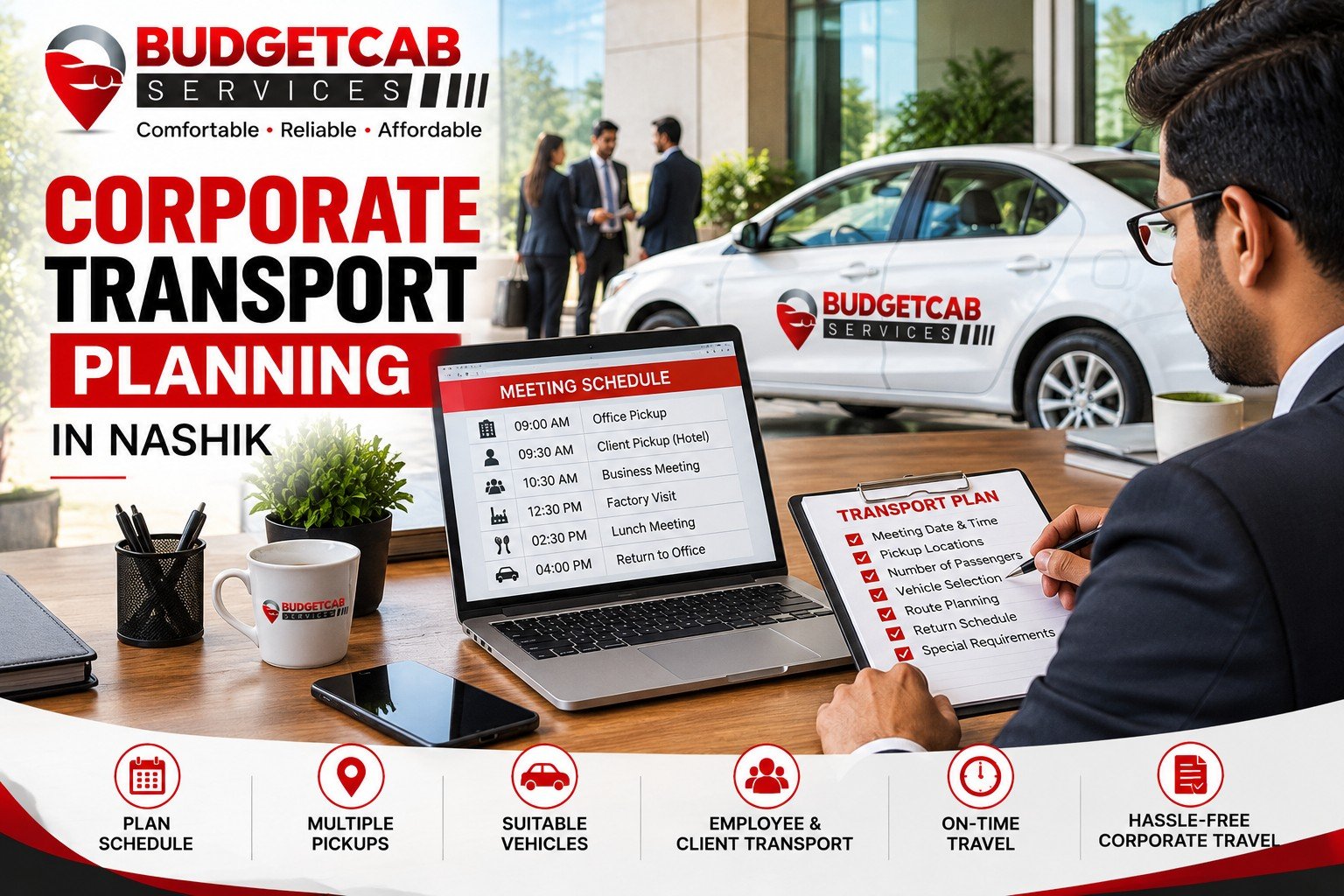
Start arranging transportation as soon as the meeting date, venue and expected attendance are confirmed.
Create a simple transport brief containing the following information:
| Planning detail | Information to confirm |
|---|---|
| Meeting date | Confirmed date and expected duration |
| Venue | Full address and entrance or gate details |
| Attendees | Number of employees, clients and visitors |
| Pickup locations | Office, hotel, railway station, airport or other agreed points |
| Arrival deadline | Time everyone should reach the venue |
| Return journey | Expected departure time and destination |
| Special requirements | Luggage, accessibility or other passenger needs |
| Coordinator | Name and contact details of the responsible organiser |
Keep this information in one shared document so the administrator, travellers and transport coordinator can refer to the same plan.
2. Calculate Pickup Times Backwards from the Meeting
One of the most common planning mistakes is choosing a pickup time without considering the full journey.
Instead, begin with the required arrival time and work backwards.
For example, suppose a business meeting in Nashik begins at 10:00 AM. The organiser wants all attendees at the venue by 9:40 AM.
The departure time should account for:
The expected journey duration.
Traffic conditions on the planned route.
Time required to collect passengers from different locations.
Parking, security checks or entry formalities.
An appropriate contingency buffer.
These factors vary by location, date and time, so confirm the route and expected journey duration before finalising the schedule.
Example of a meeting-day schedule
| Activity | Illustrative time |
|---|---|
| Meeting begins | 10:00 AM |
| Attendees should arrive | 9:40 AM |
| Final vehicle arrival deadline | 9:30 AM |
| Pickup and departure | Calculate using the route and travel buffer |
These times are illustrative planning targets, not a prediction of actual Nashik traffic or travel time.
For important client meetings, communicate the pickup time clearly and ask attendees to be ready before the scheduled departure.
Before finalising departure times, use Google Maps route planning to review directions and estimate the journey for your planned route.
3. Choose the Right Cab Arrangement for Your Team
The best transport arrangement depends on the number of passengers, pickup locations, luggage and the flexibility required during the day.
Individual or separate pickups
Separate pickups may be appropriate when senior visitors, clients or employees are arriving at different locations or at different times.
Before arranging separate vehicles, compare the cost and coordination requirements with a shared option.
Shared transportation
A shared vehicle may be practical when several colleagues are travelling from the same office, hotel or nearby pickup point.
However, avoid combining passengers whose schedules conflict or whose pickup locations create unnecessary detours.
Dedicated cab for the meeting day
A dedicated cab arrangement may suit a schedule involving multiple appointments, office visits or a return journey at an uncertain time.
Confirm the booking terms in advance, including:
Whether the vehicle remains available throughout the agreed period.
Included hours and kilometres, if applicable.
Charges for additional usage, if applicable.
Parking, tolls and other applicable expenses.
The expected end time and return arrangements.
Always confirm the actual package inclusions with the provider rather than assuming that every booking covers the same expenses.
4. Select a Vehicle According to Passenger Requirements

Vehicle selection should be based on practical requirements rather than appearance alone.
Consider these common options:
Sedan: May suit a small group or individual business traveller with limited luggage.
SUV such as an Ertiga: May be suitable for a larger group when passenger capacity and luggage requirements are compatible.
Innova Crysta: May be considered for business visitors or groups seeking a larger vehicle, subject to availability and the specific booking arrangement.
Before confirming a vehicle, check the usable seating capacity, luggage space, passenger comfort and any specific requirements.
If several vehicles are needed, prepare a passenger allocation list so that every attendee knows which vehicle to board.
5. Coordinate Multiple Pickups Without Creating Delays

When attendees are travelling from different locations, the pickup sequence should be planned carefully.
For example, a company may need to collect employees from an office and pick up a visiting client from a hotel before travelling to a meeting venue.
Use the following process:
List every passenger and pickup address.
Identify passengers who can reasonably share a vehicle.
Check the route order and expected journey times.
Avoid adding unnecessary stops to a time-sensitive journey.
Share the final pickup sequence with all passengers.
Nominate one coordinator to handle schedule changes.
Do not promise that a single vehicle can accommodate every passenger or location without first checking capacity and route feasibility.
For important meetings, a simpler pickup plan is often easier to manage than an overly complicated route.
6. Prepare for Schedule Changes and Unexpected Delays
Business schedules can change because of extended meetings, delayed arrivals, traffic disruptions or additional appointments.
A transport plan should identify who will communicate changes and what options are available.
Before the meeting
Confirm the booking and pickup details.
Share the driver’s contact information when provided by the operator.
Keep the transport coordinator’s contact details accessible.
Confirm the venue entrance and pickup point.
Agree on how timing changes will be communicated.
During the meeting day
Notify the transport coordinator promptly if the meeting runs late.
Confirm any additional stops before changing the route.
Check whether the existing booking allows extended usage.
Arrange a separate vehicle if the original schedule cannot accommodate the change.
After the meeting
Confirm the return pickup location and expected departure time. If attendees are travelling to different destinations, verify each drop-off requirement before the journey begins.
A clear communication process can prevent avoidable confusion, even when the original schedule changes.
7. Estimate the Corporate Travel Budget Before Confirming
A transport budget should account for the complete booking arrangement rather than only the initial quoted amount.
Depending on the provider and package, relevant cost items may include:
Base booking charge.
Included hours or kilometres.
Additional hours or kilometres.
Toll and parking charges.
Waiting charges, where applicable.
Extra pickup or drop-off requirements.
Applicable taxes or other disclosed charges.
Ask for a written quotation that clearly identifies what is included and excluded.
Corporate cab booking checklist
Before approving the booking, confirm the following:
Date and pickup time.
Pickup and destination addresses.
Passenger count and luggage requirements.
Vehicle type and availability.
Booking duration and distance allowance, if applicable.
Additional charges and payment terms.
Return journey and waiting requirements.
Booking confirmation and contact details.
This checklist helps administrators compare quotations on a consistent basis.
8. Plan Transportation for Different Types of Business Meetings
The transport arrangement may differ according to the purpose of the visit.
Client meetings
Prioritise clear pickup instructions, accurate venue details and enough time for attendees to arrive before the meeting.
Recruitment interviews
When several candidates are expected, prepare separate arrival slots and ensure that the pickup plan does not create conflicts between interview schedules.
Training sessions and workshops
For group transportation, confirm attendance numbers in advance and allocate vehicles according to passenger capacity.
Factory visits and business appointments
Confirm the destination address, gate or entry instructions, expected visit duration and return pickup arrangement.
Airport or railway station arrivals
Collect the arrival details, agreed meeting point and passenger contact information before arranging onward transportation. Confirm any waiting terms with the provider.
9. How to Arrange Corporate Meeting Transport in Nashik
Businesses looking to organise local meeting transportation can follow a straightforward booking process.
Step 1: Share the itinerary. Provide the date, pickup point, destination, passenger count and expected return time.
Step 2: Explain the requirements. Specify whether you need one-way transportation, multiple pickups or a cab for several appointments.
Step 3: Confirm the vehicle. Select an appropriate vehicle after checking passenger capacity and availability.
Step 4: Review the quotation. Verify the included distance or duration, additional charges and payment terms.
Step 5: Confirm the booking. Keep the written confirmation and communicate the final itinerary to everyone involved.
Businesses can explore the Taxi Service in Nashik page to review the available cab service information and discuss their transportation requirements.
For general planning guidance, the existing Nashik Cab Booking Guide may also be useful.
10. Common Corporate Transport Planning Mistakes to Avoid
Even a straightforward meeting can become difficult to manage when important details are missed.
Avoid these common mistakes:
Booking too late: Vehicle availability may be limited, especially when requirements involve several passengers or pickups.
Ignoring pickup details: An incomplete address can cause confusion at offices, hotels and large premises.
Underestimating journey time: A schedule without a suitable buffer can put the meeting at risk.
Choosing the wrong vehicle: Passenger count and luggage requirements should be confirmed before booking.
Not confirming additional charges: Unclear package inclusions can lead to unexpected costs.
Failing to plan the return journey: A successful arrival does not automatically resolve the transport arrangements after the meeting.
Changing the itinerary without coordination: Additional stops can affect timings, cost and the schedules of other passengers.
A short review of the transport plan before departure can help catch these issues early.
Frequently Asked Questions
How early should a company arrange corporate transportation in Nashik?
Arrange transportation once the meeting date, itinerary and passenger requirements are reasonably clear. For multiple vehicles, important visitors or complex pickup schedules, allow additional time to coordinate the booking. Confirm availability with the provider.
Which cab is suitable for a corporate meeting?
The right choice depends on passenger numbers, luggage, travel requirements and budget. A sedan may suit a small group, while a larger vehicle may be more practical for several passengers. Confirm capacity and availability before booking.
Can a cab be arranged for several business meetings in one day?
A dedicated cab arrangement may be suitable when several appointments are scheduled. Confirm the route, booking duration, included distance, waiting terms and charges for additional usage before finalising the booking.
What information should an office administrator provide when booking a cab?
Provide the travel date, pickup time, pickup and destination addresses, passenger count, vehicle preference, expected duration and return requirements. Also explain any additional stops or special arrangements.
How can businesses avoid last-minute transport problems?
Confirm the booking in writing, share clear pickup instructions, assign a transport coordinator, allow reasonable travel time and agree on how schedule changes will be handled.
Conclusion
Effective corporate meeting transport planning in Nashik begins with a clear itinerary, realistic arrival targets, suitable vehicle selection and reliable communication.
Office administrators can simplify business travel by confirming passenger requirements, coordinating pickup locations, reviewing booking terms and planning for schedule changes before the meeting day.
Budget Cab Services – Nashik can be considered when exploring local cab arrangements for business travel. Share your itinerary and requirements with the service provider to discuss suitable transportation options and confirm the applicable booking terms before travelling.
One Response